
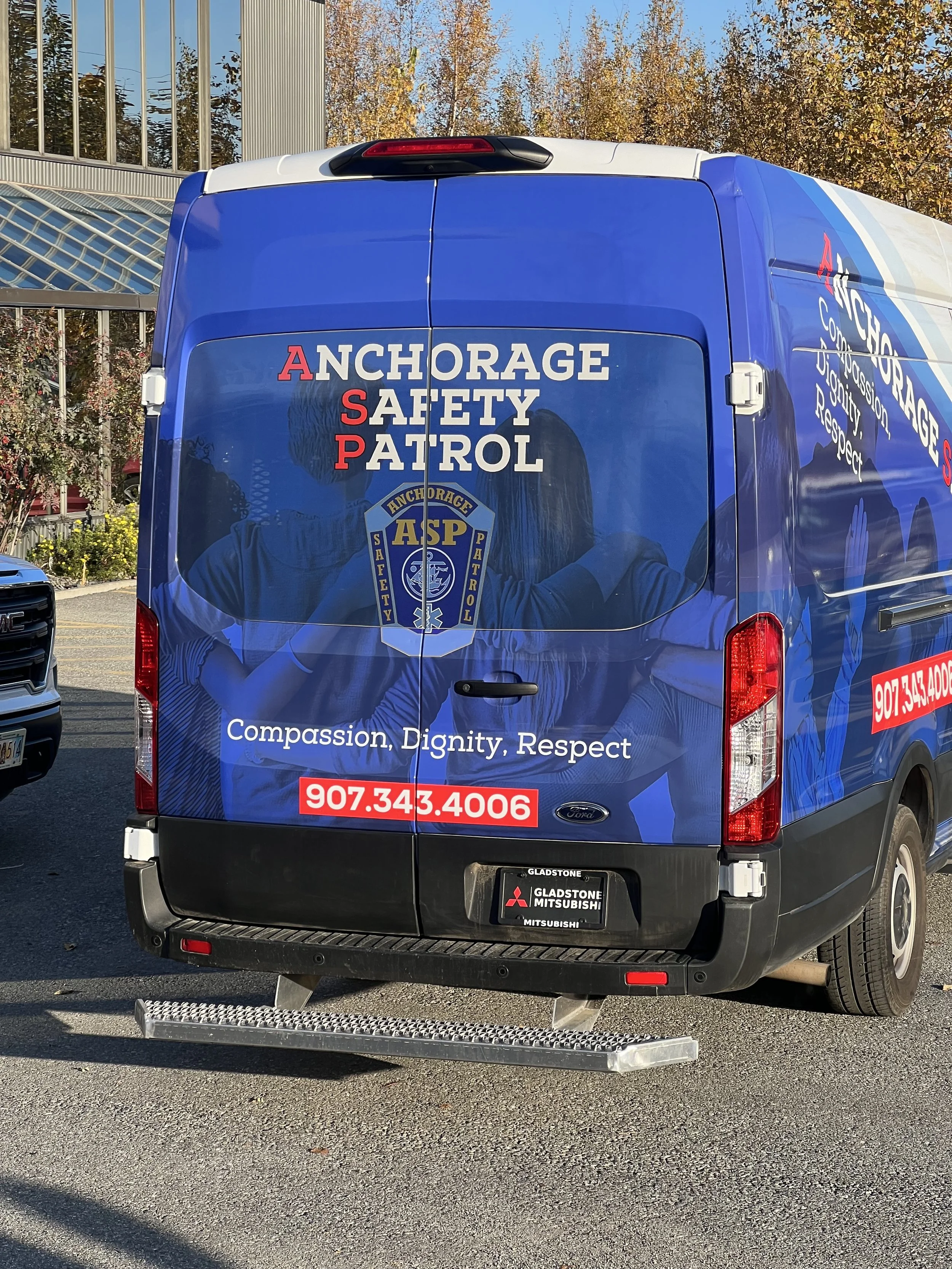
Safety now, support for what comes next.
The Anchorage Safety Patrol and Anchorage Safety Center are Municipality of Anchorage programs operated by SALA under contract.
Anchorage Safety Center / Patrol (ASC/P) focuses on providing services to individuals who are incapacitated by the effects of drugs or alcohol.
Anchorage Safety Patrol maintains a constant patrol of highly specialized custom upfitted vehicles designed to safely respond to and transport individuals to Anchorage Safety Center and other appropriate agencies. ASP is dispatched by Anchorage Fire Department by requests from local agencies or 311.
Individuals can be dropped off at Anchorage Safety Center by authorized local authorities or, more typically, Anchorage Safety Patrol. Anchorage Safety Center monitors and provides care until final discharge.
Together, our teams provide support for anyone they encounter by connecting them to other organizations that offer help. We pride ourselves in guiding our operations with Compassion, Dignity, and Respect.
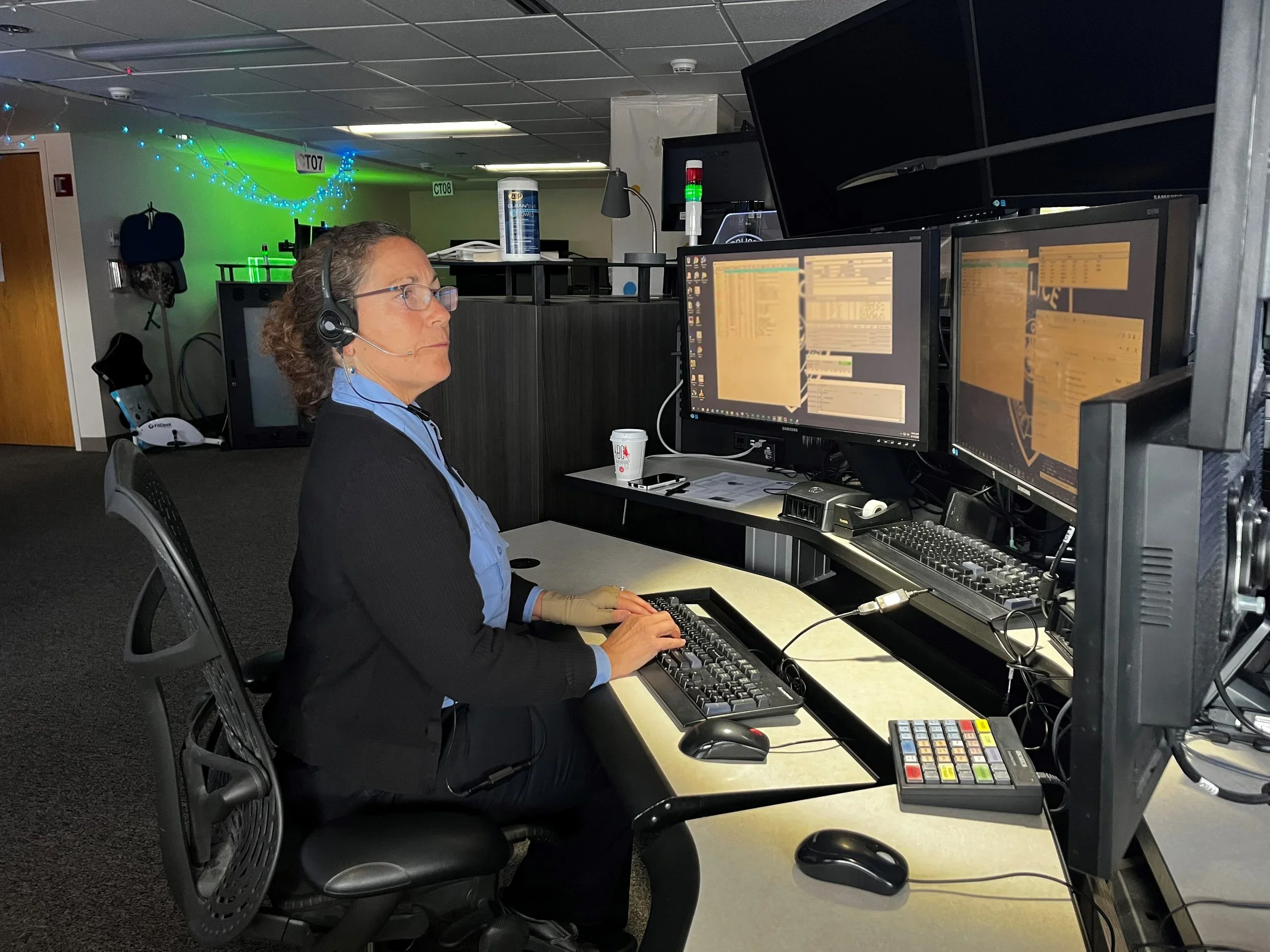
Concerned about someone in public? - Make the call.
If someone appears unable to care for themselves because of alcohol or drug use, call 311 and request the Anchorage Safety Patrol. 311 will route you to Anchorage Fire Department Dispatch where the appropriate response will be determined. This may include response of AFD, APD, and/or ASP.
If you are uncertain of the person’s condition, dial 911.
When calling, be prepared to provide:
The person’s exact location
A brief physical description
Whether the person is conscious and breathing
Any injuries, hazards, or immediate safety concerns
The direction the person is traveling, if they are moving
Anchorage Safety Patrol teams include a CPR First Aid trained driver and an Emergency Medical Technician. If they are dispatched, they assess the situation and help determine the most appropriate safe destination. When appropriate, the individual may be transported to the Anchorage Safety Center, where medically trained staff provide observation and support during the sobering process.
Calling ASC/P is an act of care. You do not need to determine how intoxicated someone is or diagnose what is happening, share what you can observe and allow trained responders to make that assessment.

Help is available when you’re ready - A difficult night does not have to define what comes next.
The Anchorage Safety Center provides short-term safety and monitored sobering. It is not a detoxification facility or a long-term treatment program, but it can be an important connection point for people who want additional support.
ASC/P staff and community resource partners help connect people with services such as withdrawal management, substance-use treatment, mental-health care, emergency shelter, medical services, housing navigation, and other forms of ongoing support.
If you have received ASC/P services before, you do not need to wait for another emergency to ask for help. Recovery can begin at any time, and the right next step will be different for every person.
Start here:
Community and social-service navigation: Call Alaska 211 to find local health, housing, treatment, food, and support services.
Treatment and recovery services: Use the State of Alaska’s treatment resources or visit FindTreatment.gov to search by location, service, insurance, and level of care.
Withdrawal management: Southcentral Foundation Detox serves Alaska residents age 18 and older. Call 907-729-6690 to ask about availability and next steps. North Star Arctic Recovery provides similar services. Call 907-729-6690
Immediate emotional or behavioral-health crisis: Call or text 988 for free, confidential crisis support at any time.
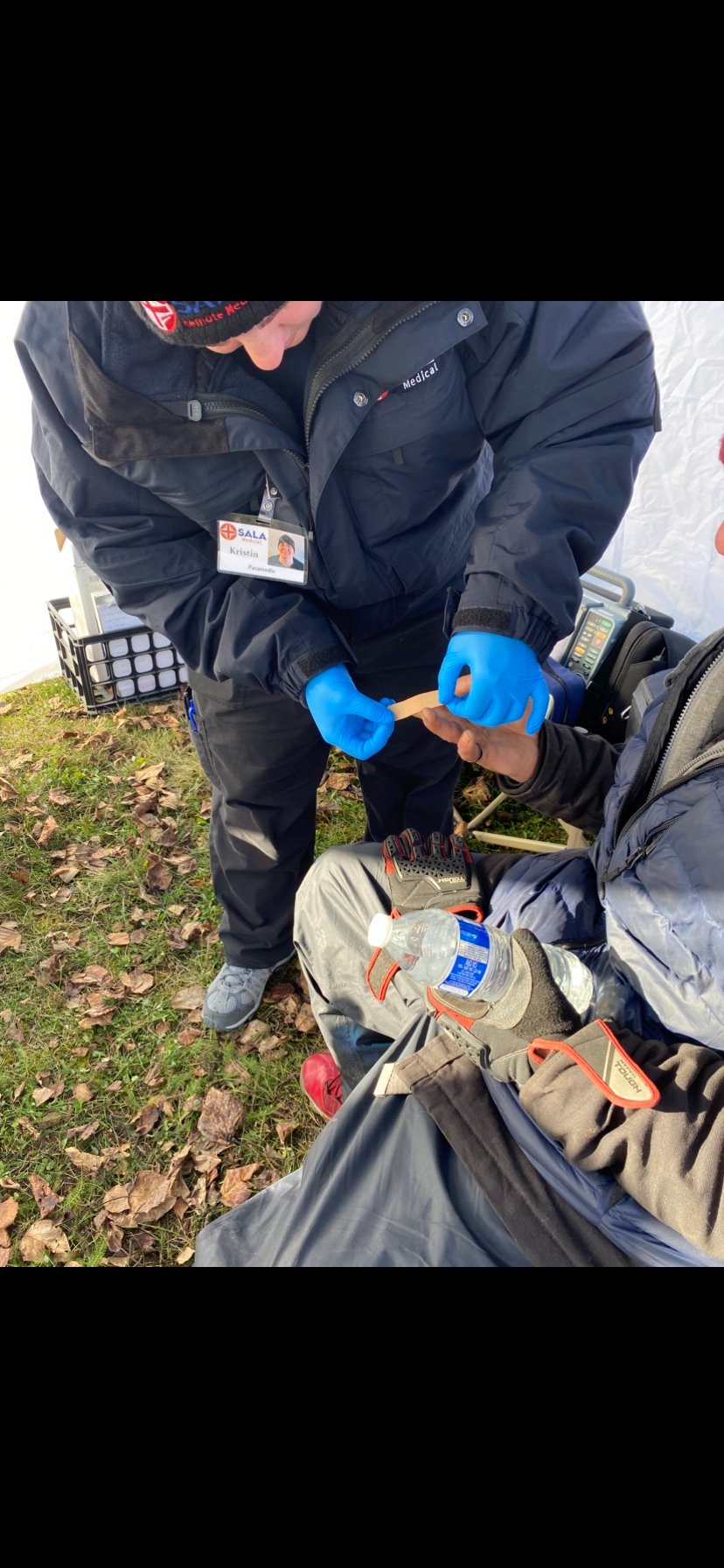
Working for a safer Anchorage - Community response, measurable impact.
ASC/P is part of a larger Anchorage response system that includes residents, the Anchorage Fire and Police departments, emergency medical services, shelters, healthcare organizations, treatment providers, outreach teams, and community resource partners.
Each call represents more than a transport. It is an opportunity to protect someone from exposure, injury, unnecessary involvement with the criminal-justice system, or inappropriate use of emergency medical resources - and, when the person is ready, to offer a connection to further care.
ASC/P offers every client access to our Community Resource Coordination team, which helps connect individuals with appropriate support during, and after their interaction with ASC/P. Through a whole-person approach, we listen, identify each person’s needs, and coordinate connections to relevant community resources and services.
Become a part of the response
Community organizations can support ASC/P by coordinating referrals, sharing accurate information, helping clients transition to appropriate services, and ensuring their own staff understand when to call 311 rather than 911.
We especially welcome collaboration with treatment providers, healthcare organizations, shelters, tribal health organizations, outreach programs, housing navigators, peer-support specialists, and organizations serving people affected by substance use.
People who have personally used ASC/P also have an important voice. Their experiences can help improve communication, dignity, safety, and connections to care.
By the numbers (2025)
< 15 min
Average response time
Friday
Busiest day
4PM
Busiest time of day
~50
Calls a day
~1,500
Calls a month
~18,000
Calls to service
SALA is proud and grateful to be trusted with providing these important services to the Anchorage community. At the heart of our organization is a simple commitment: do the right thing first and treat every person with dignity, compassion, and respect. We consider this work both a privilege and an incredible opportunity to help others while contributing to a safer, healthier community.